
If you manage a commercial property around Garden City Park, you already know how fast utility bills can climb. I've seen it happen with shopping plazas, office buildings, warehouses, and multi-tenant properties across Nassau County. The lights run all night, the fixtures are old, and the electric meter never seems to slow down.
That’s why LED lighting upgrades are becoming a practical choice for many commercial properties in Garden City Park.
At Brookway, we work with commercial clients who want to lower costs, improve safety, and give their property a modern, polished look. And outdoor lighting is one of the fastest ways to do all three at once.
In this guide, we want to walk you through everything you need to know about commercial LED upgrades, from the real cost savings to the right fixtures, common mistakes to avoid, and how the process works from start to finish.
Why Commercial Properties Around Garden City Park Are Making the LED Switch
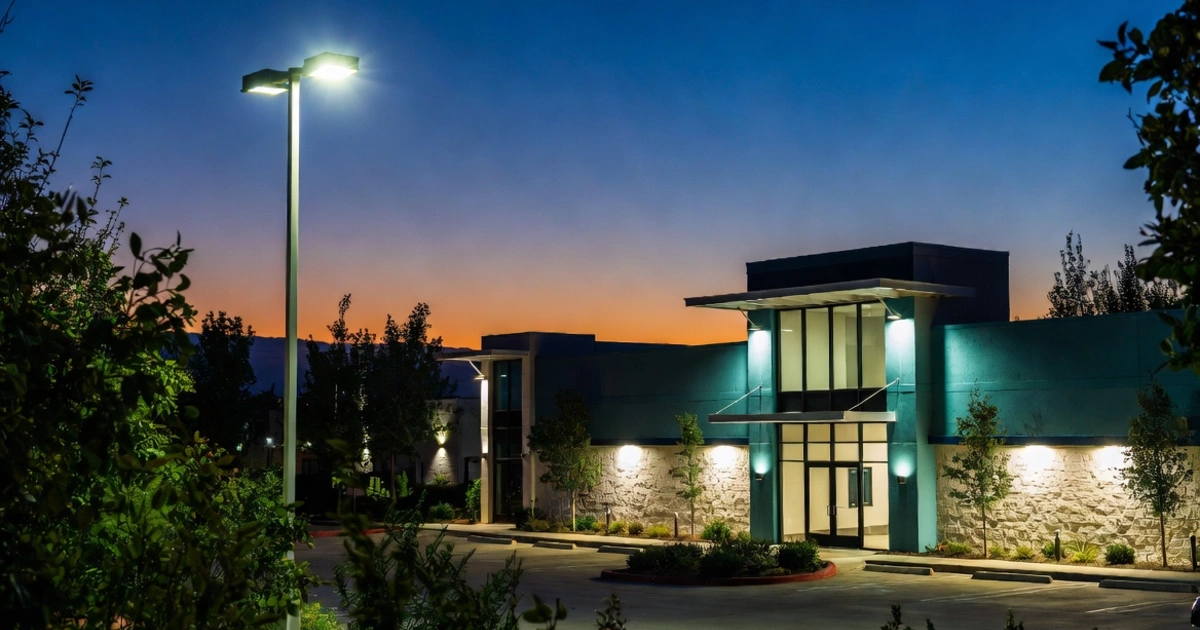
Utility costs in Nassau County have been rising for years, and they are not slowing down. For commercial property owners running older HID or fluorescent outdoor fixtures, that means paying significantly more each month than necessary.
According to the U.S. Department of Energy, “LED lighting uses up to 75% less energy than traditional lighting systems.” That is not a small number. For a parking lot running 20 to 30 metal halide fixtures through the night, switching to LEDs can translate into hundreds of dollars saved every single month.
Beyond the energy savings, older fixtures create real problems:
- Higher maintenance costs from frequent bulb replacements.
- Uneven lighting that creates dark spots in parking lots and walkways.
- Outdated appearance that affects how customers and tenants perceive the property.
- Safety risks from poorly lit areas around entrances and perimeters.
Switching to LED lighting is not just about saving energy. It reduces maintenance, improves visibility, and gives commercial properties around Garden City Park a cleaner, safer, and more modern look.
Where LED Lighting Makes the Biggest Impact on Your Property
An LED upgrade is not just swapping one bulb for another. It means replacing your outdated fixtures with modern, high-efficiency LED systems designed specifically for commercial outdoor spaces.
Parking Lot Lighting
Parking lots are usually the biggest energy drain on a commercial property. Older pole lights with metal halide or high-pressure sodium bulbs consume enormous amounts of power and produce inconsistent light quality.
Modern LED pole lights deliver brighter, more even coverage with far less wattage. We also integrate smart controls like photocells, timers, and motion sensors so the lights only operate at full brightness when needed. That alone can cut energy consumption significantly compared to lights that run at full power from dusk to dawn, regardless of activity.
Building Facade and Signage Lighting
Your storefront is often the first thing a customer or tenant sees. Older wall packs and flood lights fade, flicker, and produce that yellowish glow that makes a property look worn down.
LED wall packs and flood lights give your building a clean, bright appearance. Better visibility means better branding, stronger curb appeal, and a more inviting entrance for anyone pulling into the parking lot.
Landscape and Pathway Lighting
Well-placed landscape lighting improves both safety and appearance. It makes it easier for people to move through pathways and entrances at night while also giving the property a cleaner, more professional look.
It’s also an important part of what we do. We design lighting that highlights trees, signage, and key building features, while keeping walkways clearly visible for customers and staff after dark.
Security and Perimeter Lighting
Dark perimeters are a liability, plain and simple. Poor lighting around the edges of a commercial property creates gaps in security coverage, reduces the effectiveness of surveillance cameras, and increases the risk of incidents.
Consistent LED perimeter lighting solves all of that. Better color rendering from modern LEDs also means your security camera footage captures clearer, more usable images compared to footage shot under older sodium vapor lights.
Which Commercial Properties Benefit Most From LED Upgrades?
In short, almost every type of commercial property benefits. But here are the ones where we see the biggest impact at Brookway:
- Office buildings with large parking areas
- Shopping centers and retail plazas
- Medical offices and healthcare facilities
- Warehouses and industrial properties
- Apartment complexes and HOA-managed properties
- Hotels and hospitality properties
- Restaurants and entertainment venues
- Multi-tenant commercial buildings
If your property has outdoor lighting that is more than 8 to 10 years old, the upgrade case is almost always strong.
How LED Lighting Reduces Long-Term Operating Costs
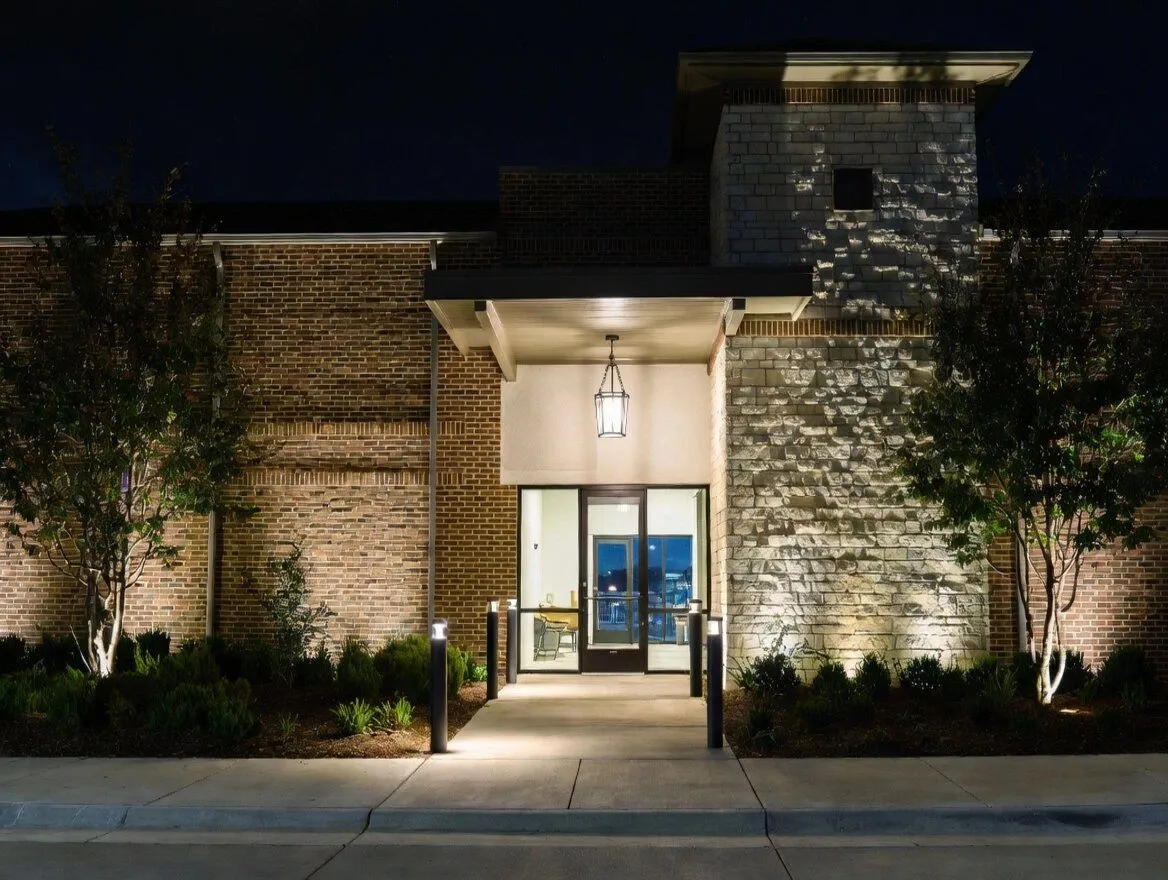
LED upgrades are not just about better lighting. They directly reduce operating costs in ways that add up month after month for commercial properties in Garden City Park and surrounding areas.
Lower Energy Consumption
This is the headline benefit. Switching from HID or fluorescent fixtures to LEDs typically cuts outdoor lighting energy consumption by 50% to 75%. For a medium-sized commercial property running 15 to 25 outdoor fixtures, that reduction can add up to thousands of dollars annually.
The exact savings depend on your current system, local utility rates, and how many hours your lights operate each night. PSEG Long Island's commercial rate structure makes this especially meaningful for properties in Nassau County.
Reduced Maintenance Costs
Older commercial fixtures require frequent bulb replacements, ballast repairs, and service calls. LED fixtures have a lifespan of 50,000 to 100,000 hours, compared to 10,000 to 24,000 hours for typical metal halide bulbs.
That longer lifespan means fewer replacement bulbs, fewer service visits, and lower overall maintenance labor costs. Over a five-year period, the maintenance savings alone often cover a significant portion of the initial upgrade investment.
Utility Rebates and Incentives
PSEG Long Island offers rebate programs for commercial properties that upgrade to energy-efficient lighting. These incentives can meaningfully reduce your upfront costs and improve the speed of your return on investment.
At Brookway, we help clients identify which rebates apply to their project and include them in the overall cost planning from the start. This is especially important when you are trying to understand what outdoor lighting investments return over time, since rebates can change the full payback timeline quite a bit.
How LED Lighting Improves Safety in Commercial Properties
We want to spend a moment on safety because it tends to get overlooked in the cost-savings conversation.
Poorly lit parking lots and walkways are genuine liability risks. Slip-and-fall incidents, vehicle accidents, and security incidents are all more likely in areas with inconsistent or insufficient lighting. For property owners and managers, that exposure is real.
LED lighting addresses this in a few specific ways:
- Improved brightness and color rendering reduce visual dead zones.
- Better surveillance camera performance in properly lit areas.
- Safer, more consistent walkways and entrances for customers and employees.
- Stronger first impression that signals a well-managed, professional property.
At Brookway, we have seen firsthand how a well-designed lighting system changes the feel of a property, not just the look. Strong lighting design directly influences both safety and how a property is perceived, which is why it plays such an important role in tenant retention, customer traffic, and overall property value.
How to Choose the Right LED Fixtures for Commercial Outdoor Spaces
Not all LED fixtures are created equal. Choosing the wrong product is one of the most common mistakes we see with commercial LED upgrades.
Lumens
Lumens measure brightness. More lumens means more light output. For parking lots and large open areas, you need fixtures with higher lumen output to achieve proper coverage.
Color Temperature
Color temperature is measured in Kelvins (K). Lower numbers (2700K to 3000K) produce a warm, yellowish light. Higher numbers (4000K to 5000K) produce a cooler, whiter light. For most commercial outdoor applications, a range of 4000K to 5000K works well. It looks clean, modern, and improves visibility without feeling harsh.
IP Ratings
IP ratings indicate how weather-resistant a fixture is. For outdoor commercial use, you want a minimum IP65 rating, which means the fixture is fully protected against dust and water jets. In coastal and rainy climates, IP66 or higher is worth considering.
Choosing Fixtures Based on the Area
- Parking lots: High-output LED shoebox or area lights on poles, typically 20,000 to 40,000 lumens, depending on pole height and spacing.
- Entrances: LED canopy lights or wall packs for covered areas, bollards or landscape lights for open walkways.
- Landscape areas: Low-voltage LED path lights, spotlights, or uplights, depending on the feature being lit.
- Perimeter and security: LED flood lights or wall packs with wide-angle coverage.
- Facade and signage: LED flood lights or gooseneck-style lights, depending on the architecture.
Smart Lighting Controls for Better Efficiency
Smart controls are where a lot of the extra efficiency gains come from. At Brookway, we commonly integrate:
- Photocells that turn lights on at dusk and off at dawn automatically.
- Motion sensors that activate lights or increase brightness when movement is detected.
- Timers for areas that only need full brightness during specific hours.
- Automated scheduling systems that adjust based on time of year or occupancy patterns.
These controls reduce unnecessary runtime and extend fixture lifespan.
Common Mistakes Property Owners Make During LED Upgrades
LED upgrades work best when they are planned properly. Most problems come from avoidable mistakes during setup and installation, not from the LED technology itself.
Choosing the Wrong Color Temperature
Going too cool (above 5000K) can make a property feel clinical or harsh. Going too warm can reduce visibility in large open spaces. Most commercial properties do best in the 4000K range. It is bright, clean, and approachable.
Skipping Smart Controls
Installing LED fixtures without smart controls is like buying a fuel-efficient car and leaving it idling all night. Controls are what deliver the full energy savings potential.
DIY Installations That Void Warranties
Commercial LED fixtures are not a DIY project. Improper installation can void manufacturer warranties, create electrical safety hazards, and result in poor fixture performance over time. Always use a licensed professional.
Ignoring Landscape Lighting
A lot of property owners focus on parking lots and completely overlook landscape and pathway lighting. That creates an uneven appearance and misses one of the biggest curb appeal opportunities available.
Most problems can be avoided with proper planning. When the right fixtures and installation are in place, LED systems perform better, last longer, and deliver real savings.
Sustainability and Compliance Benefits of LED Lighting
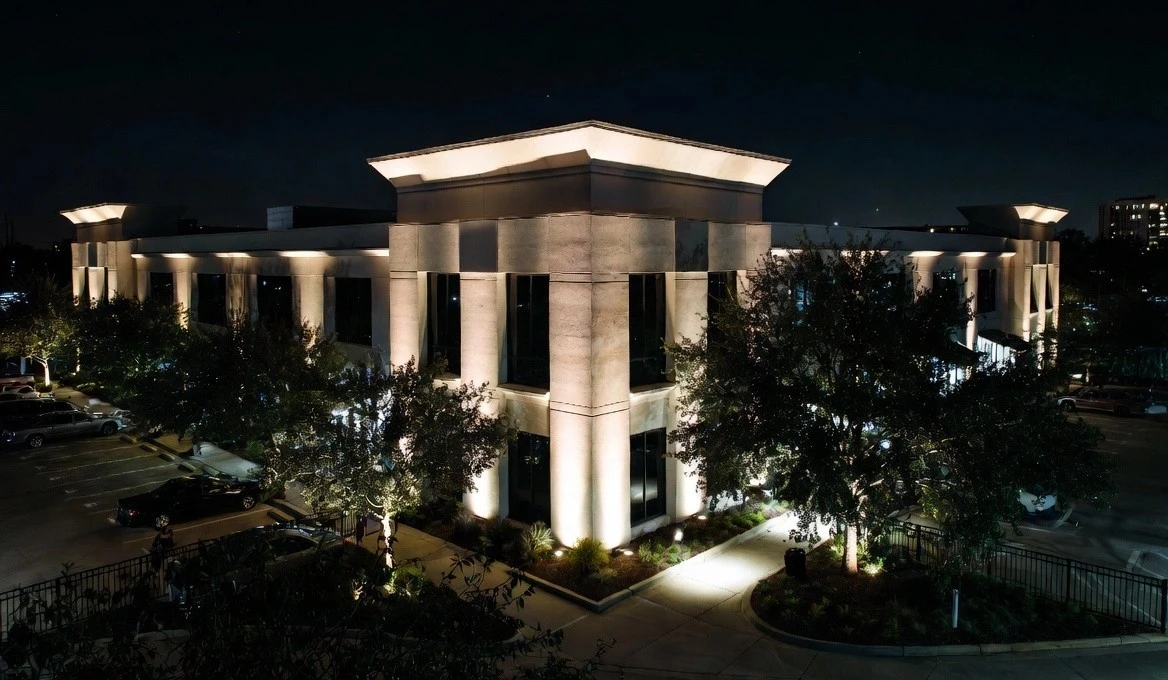
For commercial properties with sustainability goals, LED upgrades deliver measurable environmental benefits alongside the financial ones.
LEDs consume significantly less energy, which means lower carbon emissions tied to your property's electricity use. Modern LED fixtures can also be designed to minimize light pollution, directing light where it is needed rather than scattering it upward into the sky.
As energy-efficiency standards tighten across commercial real estate, having a modernized lighting system also positions your property well for future compliance requirements. This is increasingly relevant for properties looking to attract environmentally conscious tenants or qualify for green building certifications.
How the LED Upgrade Process Works at Brookway
A proper LED upgrade is not just about replacing fixtures. It follows a clear process to make sure the lighting is designed correctly, installed safely, and performs the way it should from day one.
Site Lighting Audit
Every project starts with a thorough evaluation of your existing system. We look at your current fixtures, measure energy usage, and identify problem areas, including dark zones, outdated equipment, and safety gaps.
Fixture Selection and Layout Planning
Based on the audit, we recommend specific fixtures and create a layout plan that ensures proper light distribution across every area of the property. We consider pole heights, fixture spacing, lumen output, and color temperature for each zone.
Professional Installation and Controls Setup
Our team handles complete fixture replacement, wiring, and integration of any smart controls. Every installation is done cleanly and correctly to ensure fixtures perform as designed and warranties remain valid.
Post-Installation Inspection
After installation, we walk the property at night to verify coverage, identify any adjustments needed, and make sure everything is performing correctly. We do not consider the job done until the lighting looks right.
Is Now the Right Time to Upgrade?
The Answer Is Yes.
Utility rates are not going down. Every month you continue running older fixtures is another month of overpaying on your electric bill. At the same time, PSEG Long Island rebate programs and energy-efficiency incentives are available now but are subject to change.
Installing before summer also means your new, efficient system is already running during peak usage months when lights are operating the longest. And every year that passes with older fixtures in place means more maintenance costs and more degraded performance.
The technology is mature, the savings are real, and the process is straightforward when you work with the right team.
Ready to Modernize Your Commercial Lighting?
The benefits of LED upgrades for commercial properties around Garden City Park are hard to argue with. Lower energy bills, reduced maintenance, better safety, improved curb appeal, and a solid long-term return on investment.
At Brookway, we handle everything from the initial site audit through installation and final inspection. If you manage a commercial property in the area and want to understand exactly what an LED upgrade would look like for your specific situation, reach out to schedule a free lighting assessment. We will walk the property with you, identify the opportunities, and give you a clear picture of what the investment looks like and what it returns.